

Introduction
Okinawa is Japan’s southernmost prefecture, a chain of islands stretching across the blue waters of the Pacific Ocean between mainland Japan and East Asia. Made up of Okinawa Island (the main island) and dozens of smaller islands, this region offers a very different sense of time, life, and travel compared to Japan’s large cities. Okinawa’s location, climate, and history have shaped a culture that feels both deeply Japanese and uniquely Okinawan.
For travelers, Okinawa is best discovered by car. Distances are manageable in a single day, coastal views unfold at every turn, and many beaches, heritage sites, and small villages are easiest to access on your own schedule. A self-drive road trip allows you to slow down, follow the coast, and experience daily island life beyond the main city of Naha.
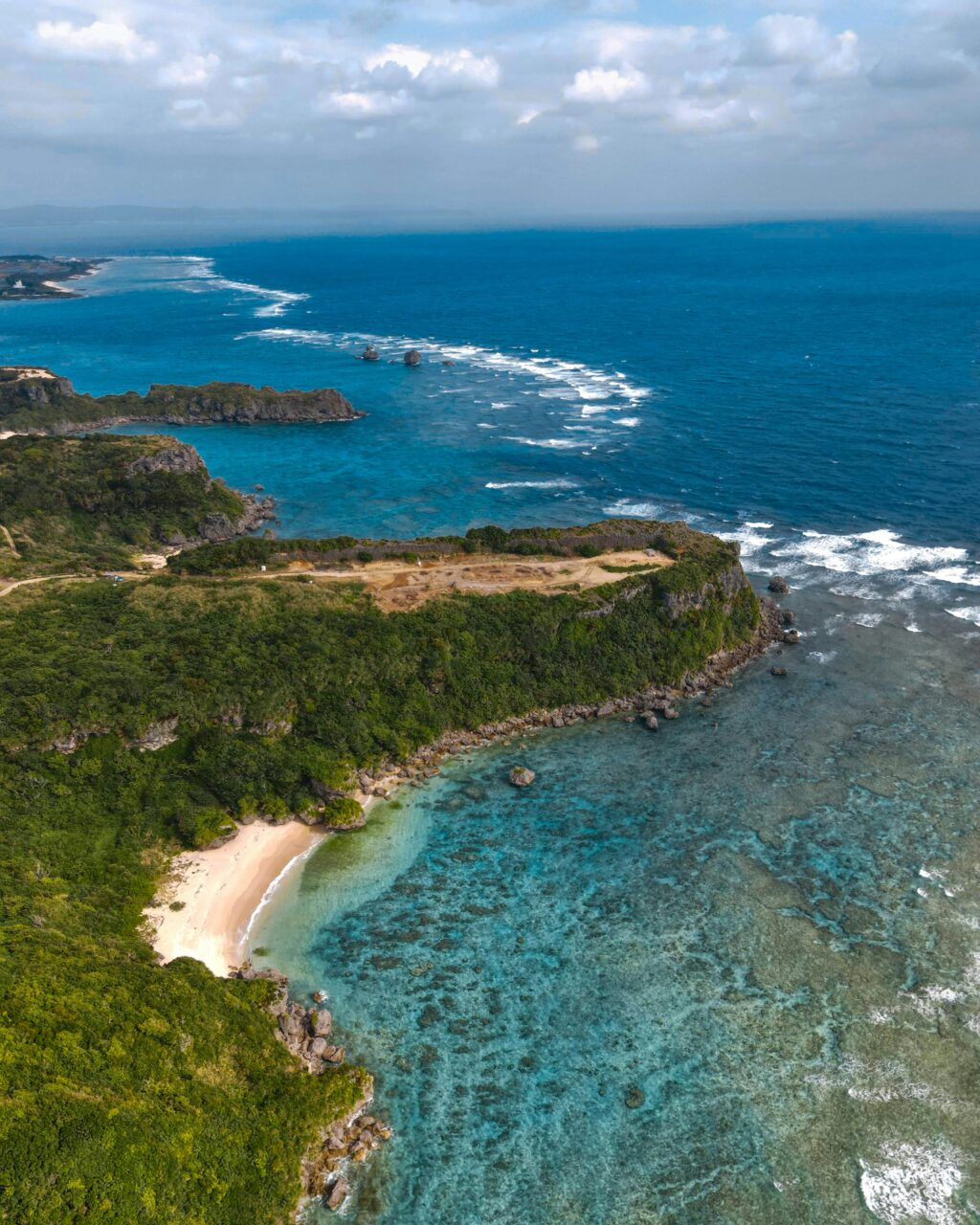
Culture & History
Okinawa’s history is long, rich, and distinct within Japan. For hundreds of years, the islands were ruled by the Ryukyu Kingdom, an independent kingdom that developed strong trade and cultural ties with China, Korea, and Southeast Asia, including Vietnam. This period left behind castles, ruins, ceremonies, and traditions that still shape Okinawan culture today.
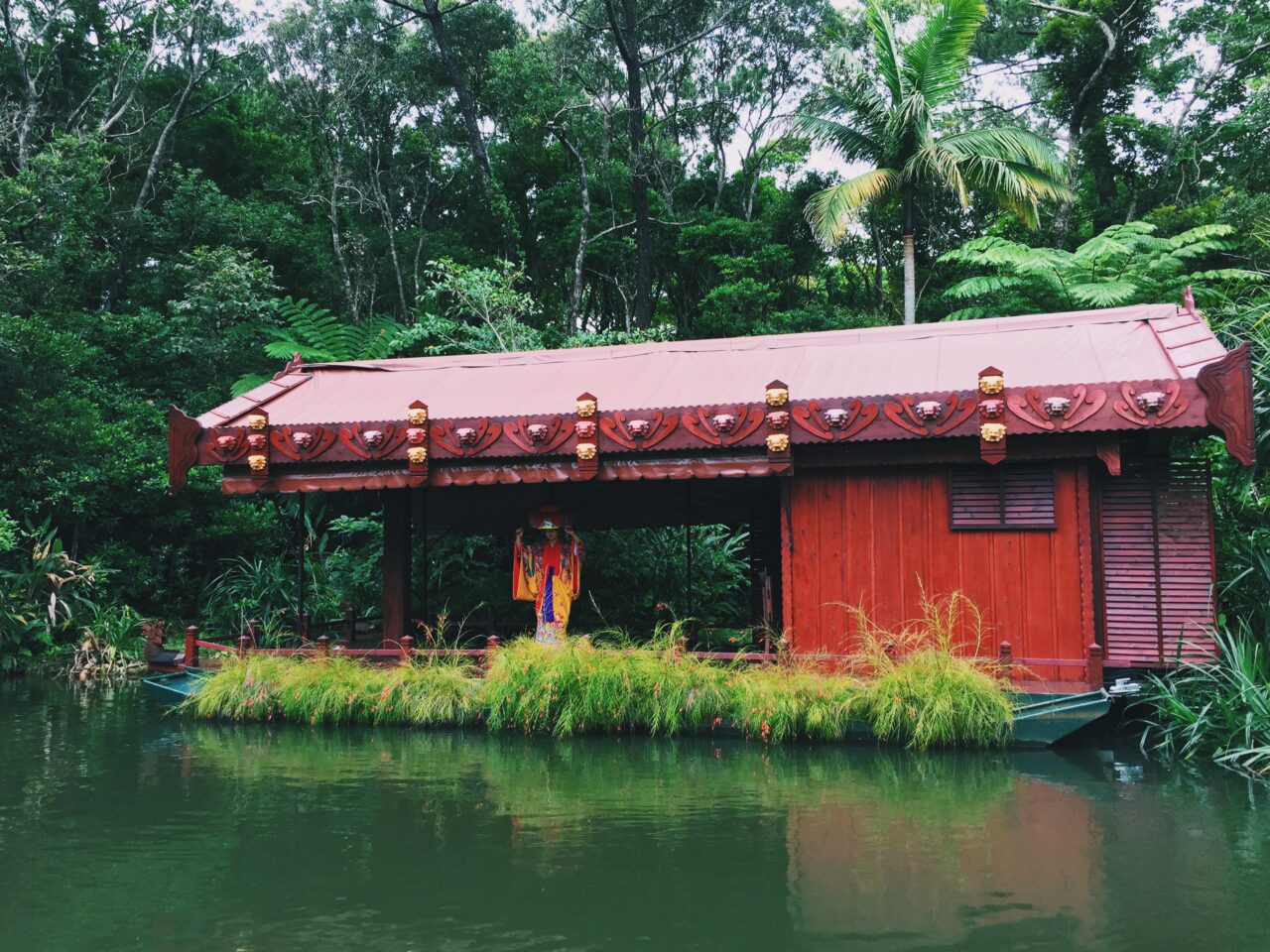
In the early modern era, the Ryukyu Kingdom became united with Japan, eventually becoming Okinawa Prefecture. During World War II, Okinawa was the site of one of the war’s largest and most devastating battles, a turning point that deeply affected the local people, land, and life. After the war, the islands remained under U.S. government administration for years, with American military forces, including the U.S. army, navy, and air forces, establishing bases that still exist today.
This layered history—royal, foreign, Japanese, and American—can be felt everywhere, from Shuri Castle ruins to memorial parks, museums, and everyday life in modern Okinawa. English is more commonly heard here than in many parts of Japan, and the islands have long served as an international cultural crossroads.
What Okinawa is Known For
Okinawa is known for its coral reefs, clear blue ocean, white beaches, and marine life, but its identity goes far beyond scenery. The islands are famous for long life expectancy, strong family ties, and a living culture rooted in tradition, music, dance, and local food.
Visitors also come to Okinawa to discover Ryukyu heritage sites, castle ruins, and sacred natural spaces. The prefecture’s national parks, caves, and forested areas—especially in the North—highlight Okinawa’s natural diversity. From the clear waters of the Kerama Islands to the subtropical forests of Yanbaru, nature is always close.
- Coral reefs, clear blue ocean, and marine life across the islands
- Distinct Okinawan culture shaped by the Ryukyu Kingdom and long foreign influence
- Unique Japanese history separate from mainland Japan for centuries
- Relaxed island life, strong family ties, and a slower sense of time
- Ryukyu heritage sites, castle ruins, and sacred natural spaces
- Subtropical climate with beaches accessible most of the year
- International history, including U.S. military presence and American influence
- Long life expectancy and traditional approaches to daily living
Top Attractions
- Shuri Castle (Shuri-jō): A UNESCO World Heritage site and former royal castle of the Ryukyu Kingdom, located near Naha. Even after fire damage, the site remains a powerful symbol of Okinawan history.
- Okinawa Peace Memorial Park: A national site in the South that honors those who lost their lives during the Battle of Okinawa.
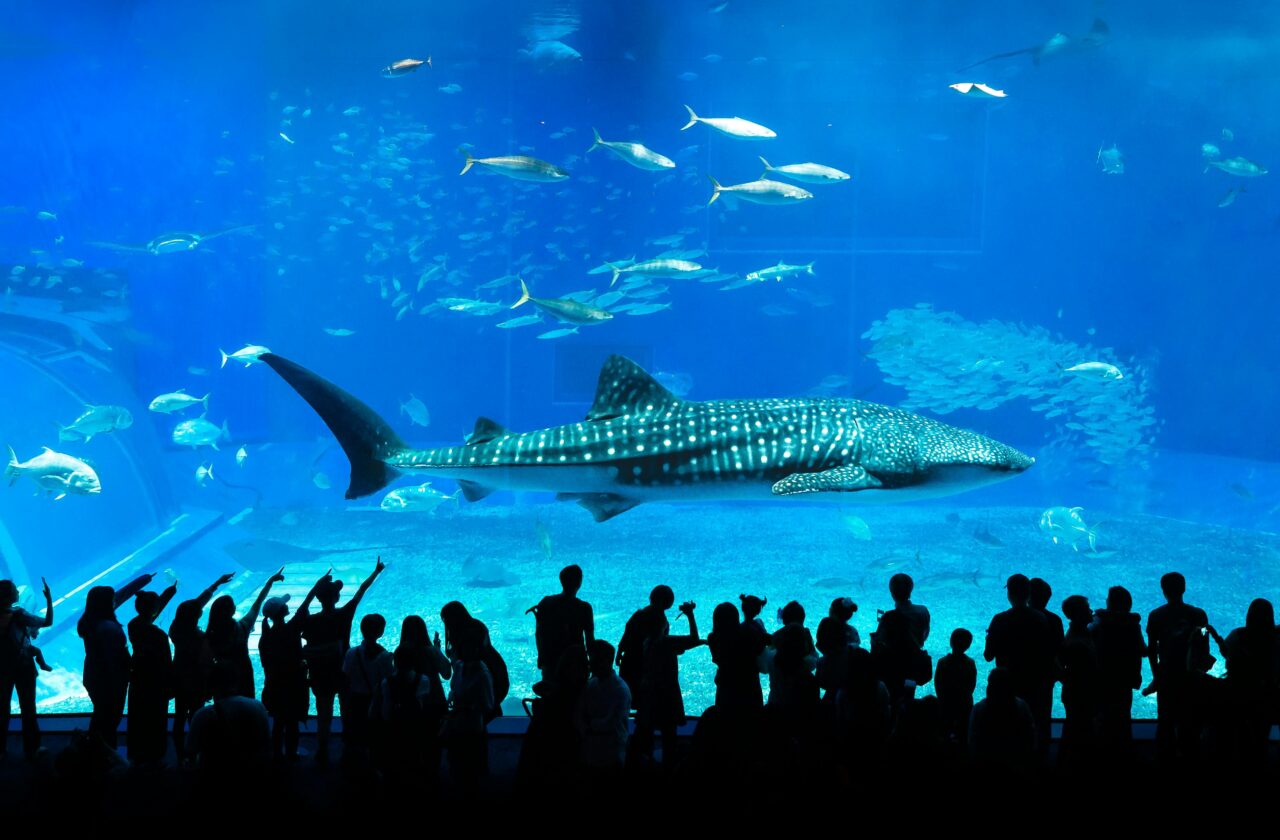
- Churaumi Aquarium: One of Japan’s largest aquariums, famous for its massive tanks and marine life from the surrounding ocean.
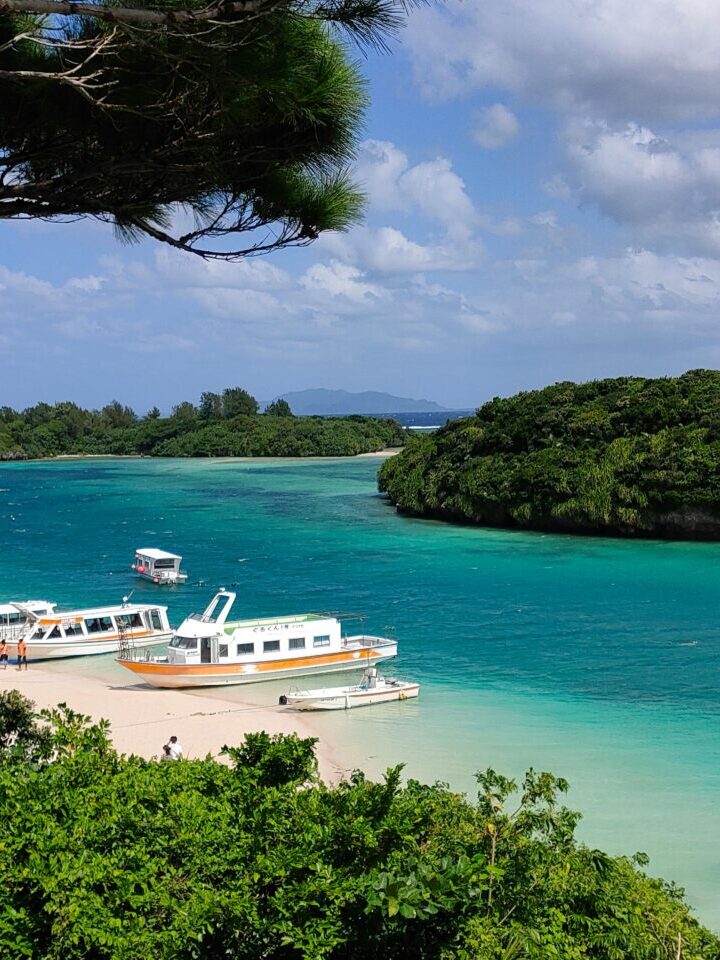
- Kerama Islands: Known for clear waters, coral reefs, and some of Okinawa’s best beaches.
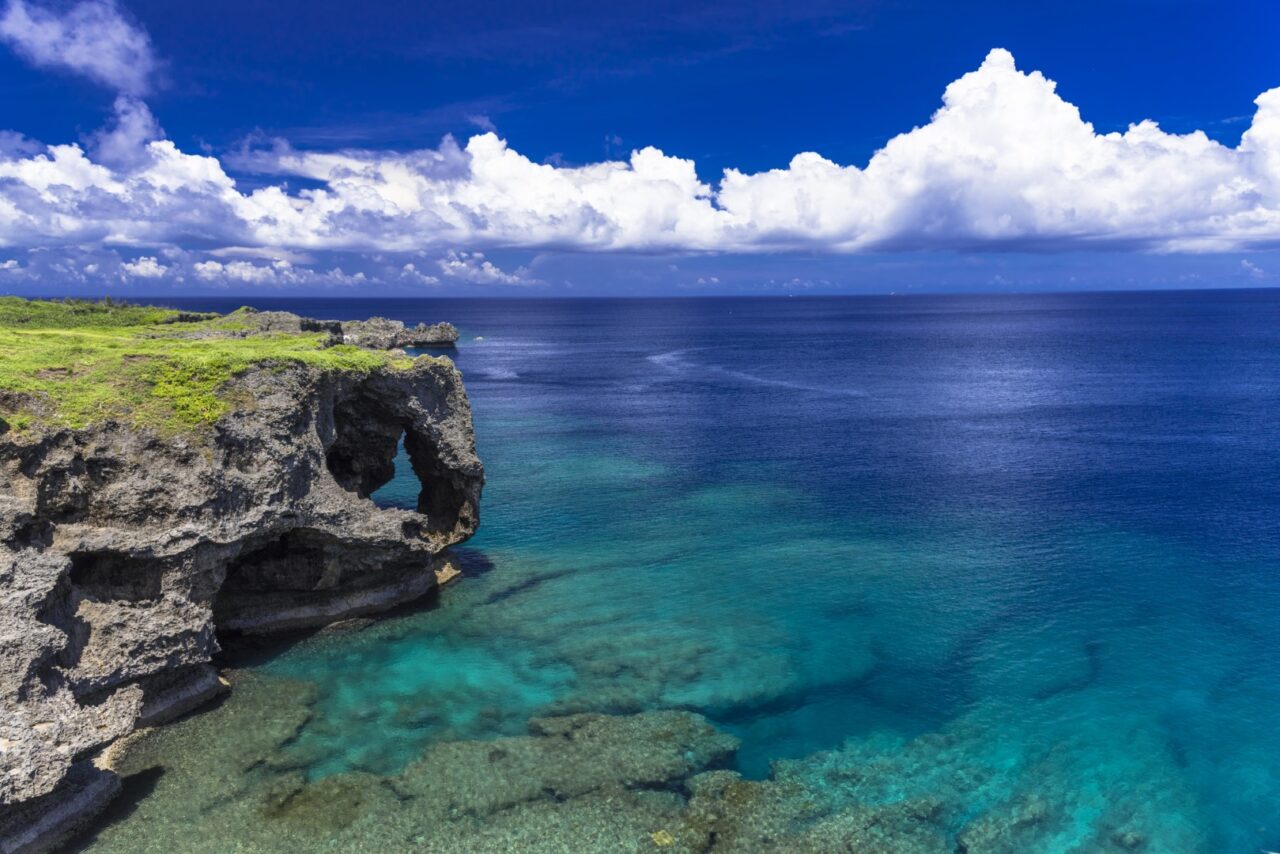
- Cape Manzamo: A dramatic cape with sweeping views of the East China Sea, perfect for photos at sunset.
- Gyokusendo Cave: A large natural limestone cave system showcasing Okinawa’s underground landscape.
Areas of Okinawa
- Southern Okinawa: Home to Naha, the capital city and transportation center. This area includes Shuri, historic sites, markets, offices, and daily local life.
- Central Okinawa: A mix of beaches, American-influenced towns, and access to both coasts. Many U.S. military bases are located here.
- Northern Okinawa (Yanbaru): Forested, quiet, and rich in nature. Ideal for scenic driving and discovering Okinawa’s original landscapes.
- Yaeyama Islands: Remote islands like Ishigaki and Iriomote, known for beaches, mangroves, and traditional island life.
- Miyako Islands: Flat islands with long bridges, clear water, and some of Okinawa’s most famous beaches.
Food, Agriculture & Local Specialties
Okinawan food reflects the islands’ history and environment. Pork is central to many dishes, often used nose-to-tail in soups, stews, and simple meals. Local vegetables, sugar cane, and seafood are staples, shaped by the warm climate and ocean access.
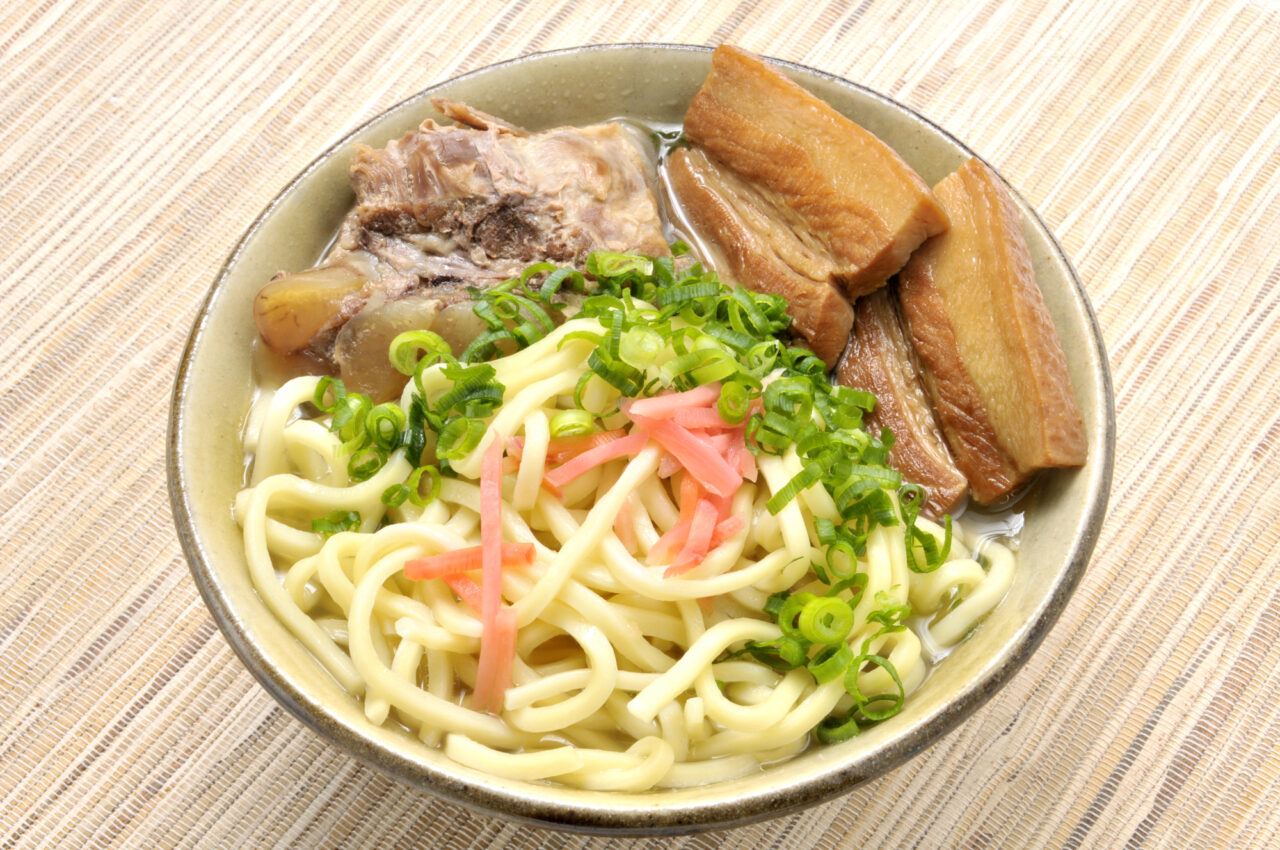
- Okinawa soba — pork-based soup with thick noodles
- Goya champuru — stir-fried bitter melon, tofu, and pork
- Kokuto — rich, dark, unrefined brown sugar
- Awamori — traditional Okinawan distilled spirit
- Beni imo — bright purple sweet potato used in both desserts and savory dishes
- Yuki shio (snow salt) — mineral-rich salt with a powdery texture; made on Miyako Island
- Sata andagi — dense, deep-fried donut balls
- Rafute — Braised pork belly stir-fried in brown sugar and soy sauce
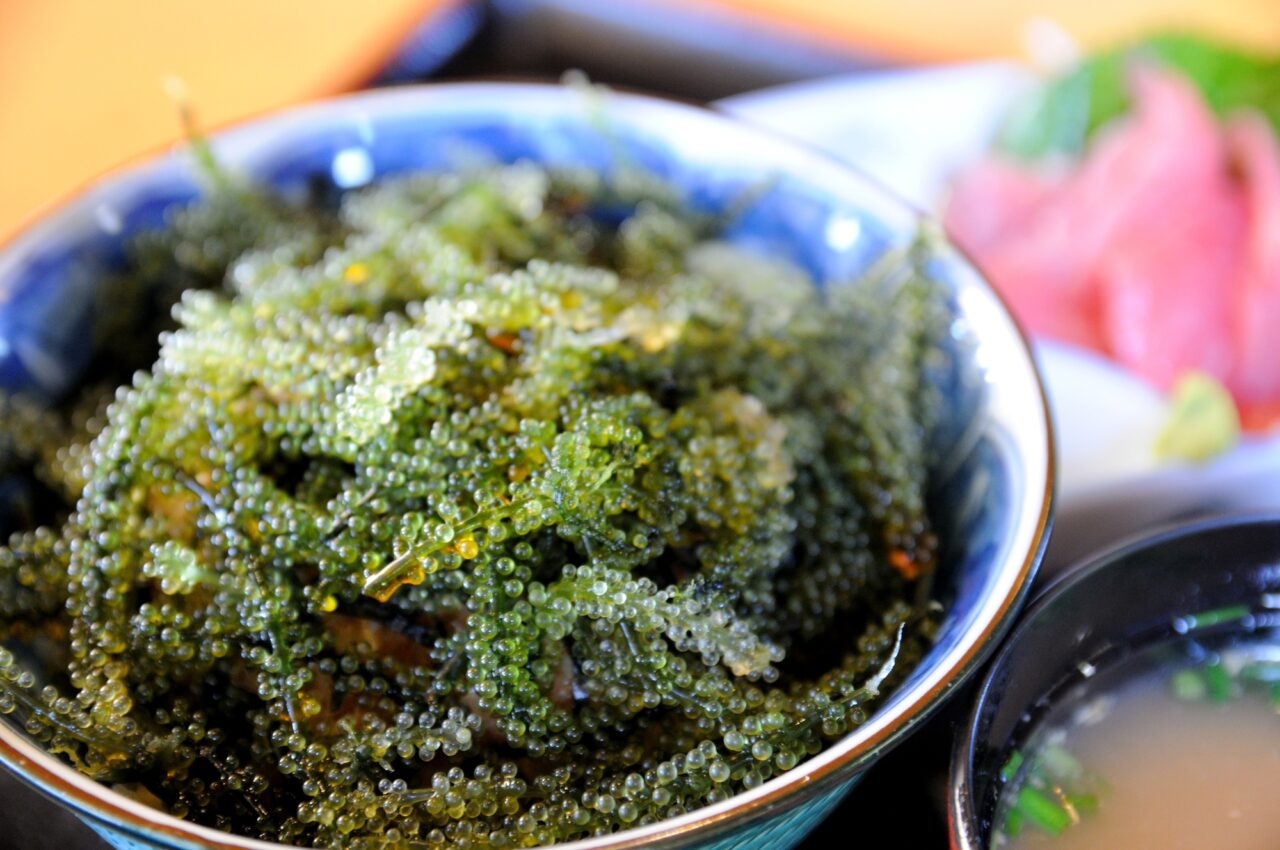
- Umibudo — Briny seaweed with the texture of popping balls, giving it a name meaning “sea grapes”
.jpg)
Best Seasons to Visit
Spring (March–May)
Mild weather, clear skies, ideal for road trips and outdoor sites
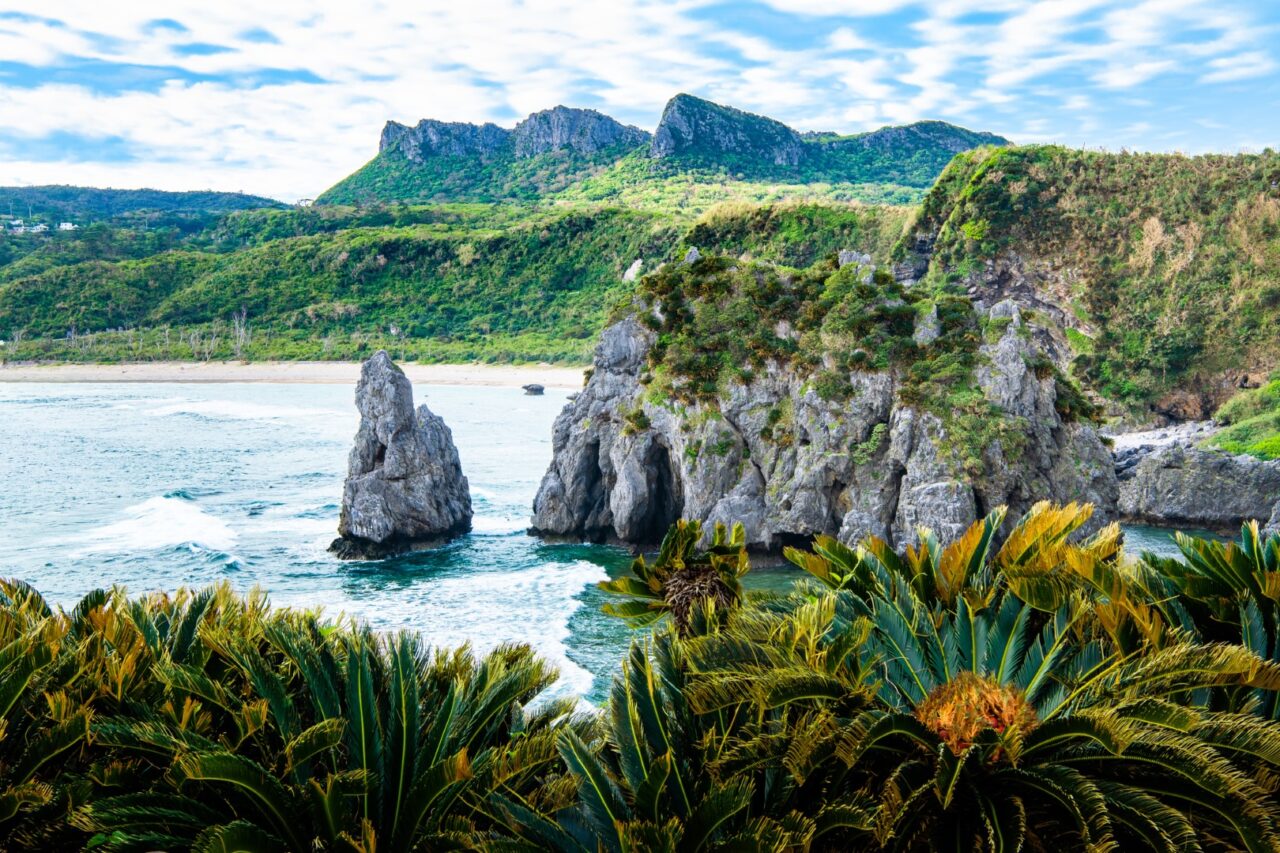
Summer (June–August)
Beach season, marine activities, festivals and events
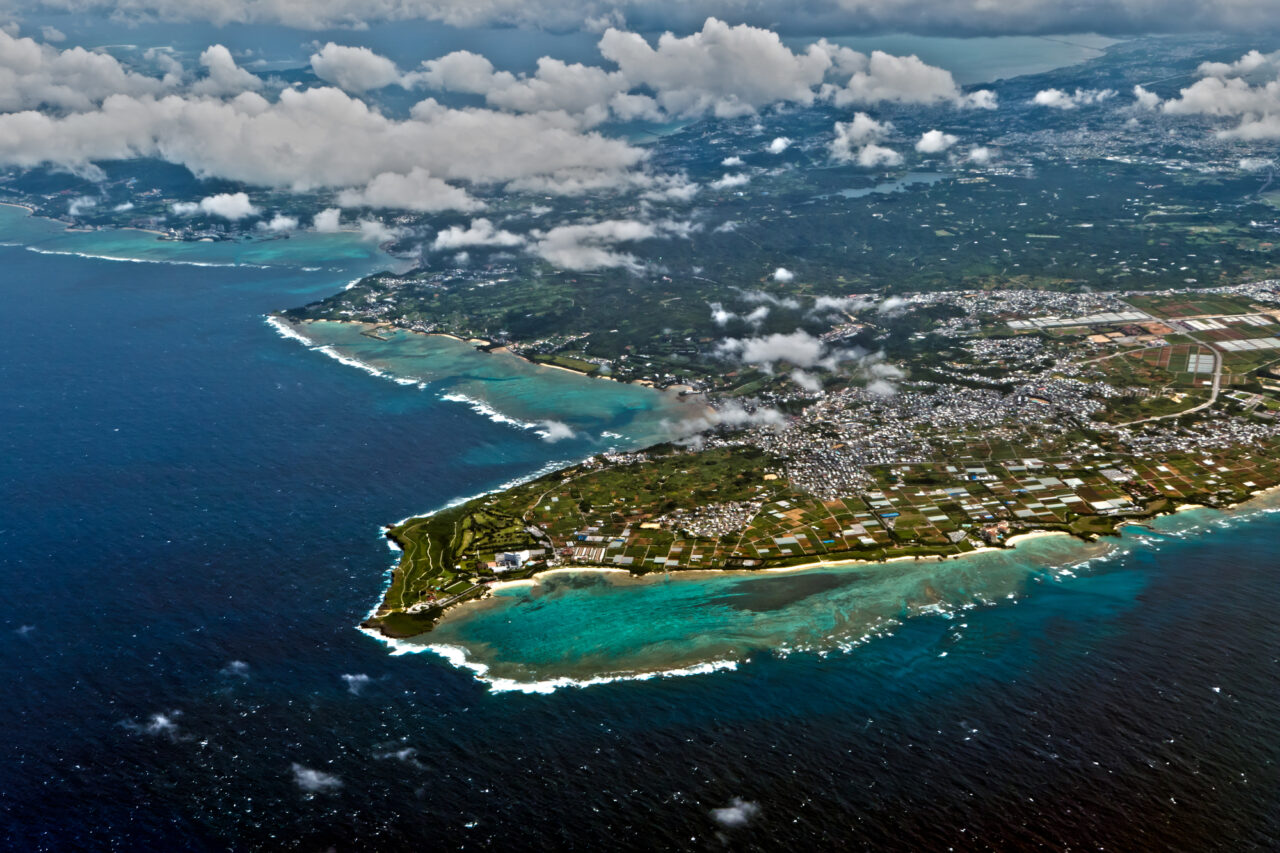
Autumn (September–November)
Comfortable temperatures, quieter travel, scenic drives
Winter (December–February)
Mild climate, fewer visitors, good for sightseeing
Scenic Roads (Perfect for a Self-Drive Roadtrip)
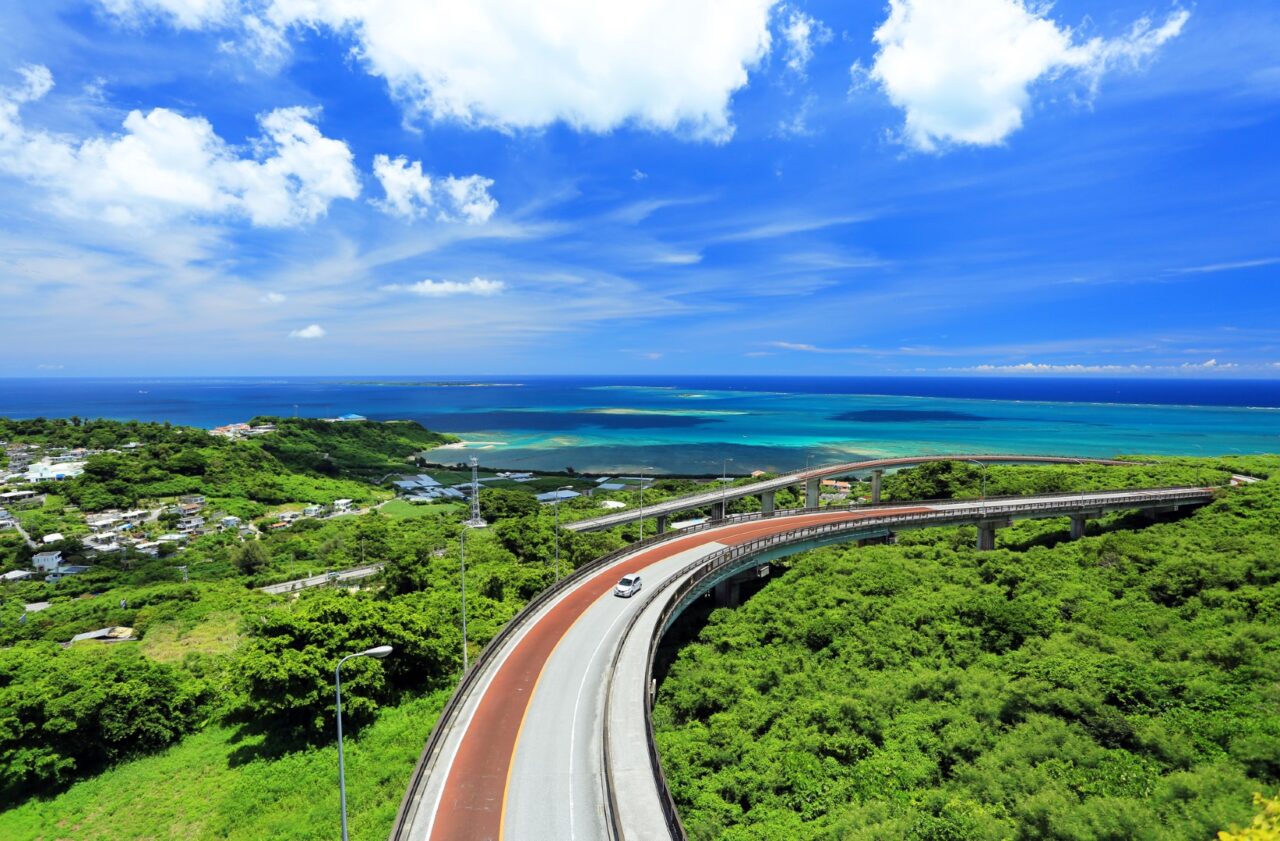
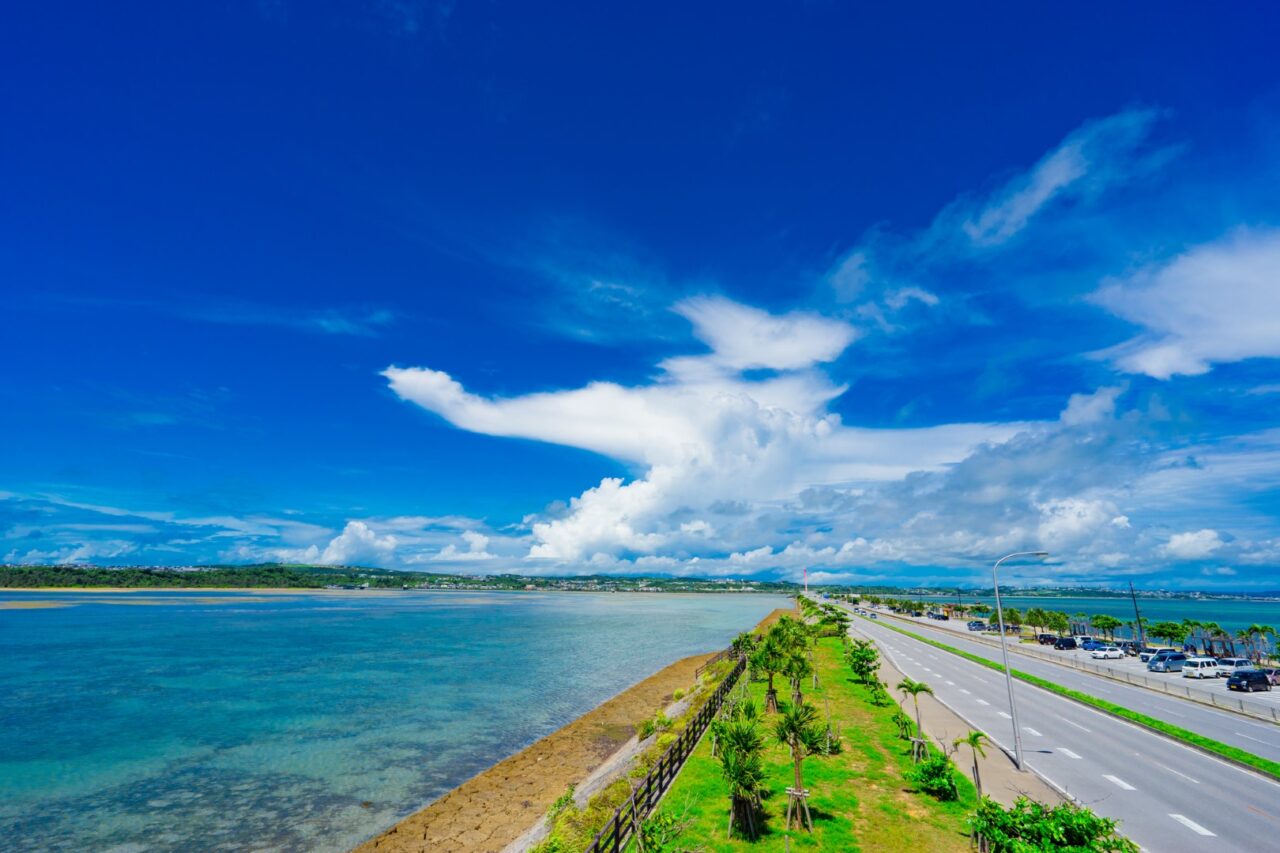
Okinawa’s islands offer some of Japan’s most scenic coastal drives, with short distances, constant ocean views, and easy access to beaches, viewpoints, and local sites.
- OTO TO CHECK
- Route 58 (West Coast Road) – Main coastal highway; long ocean views, beaches, cafes, sunset stops.
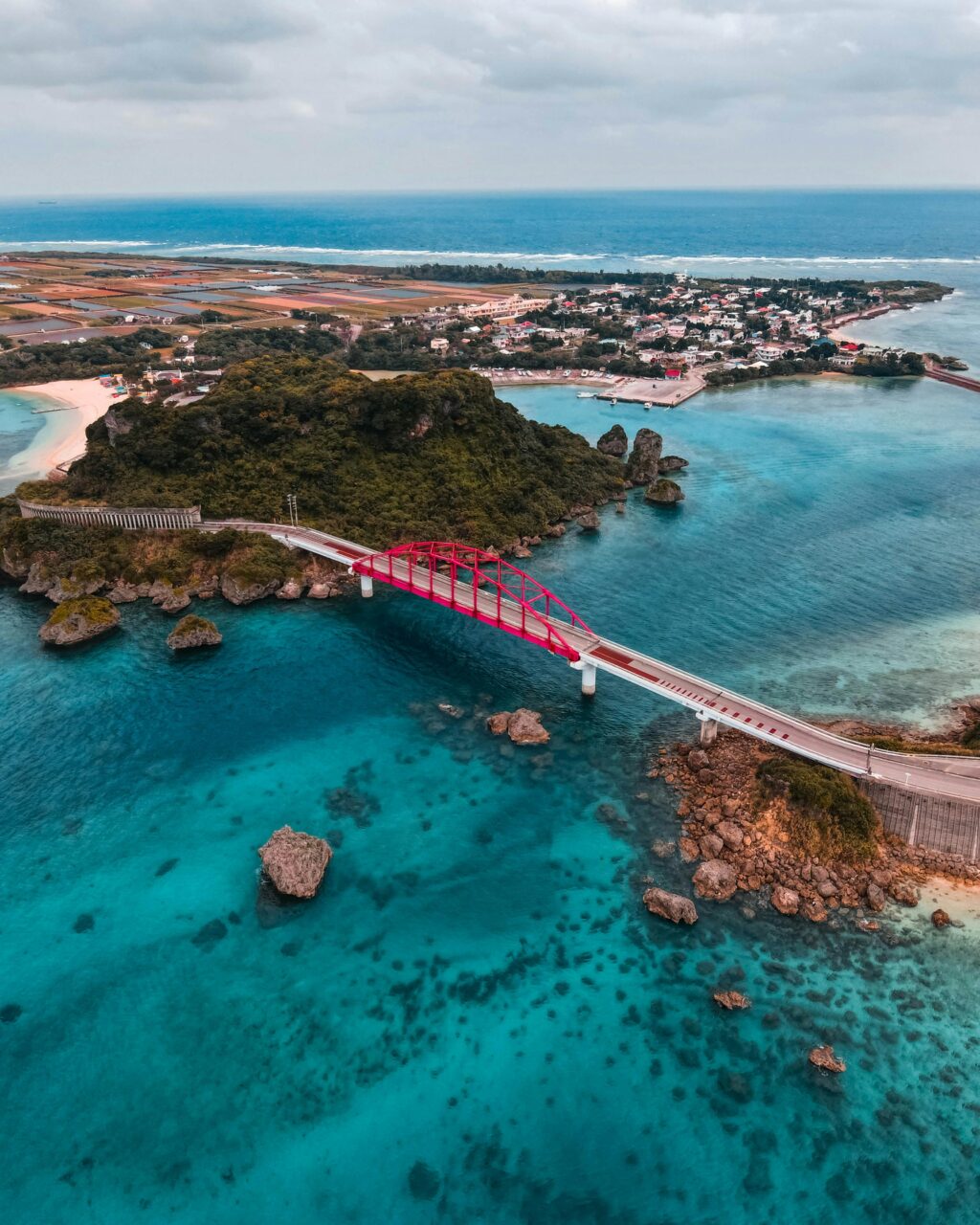
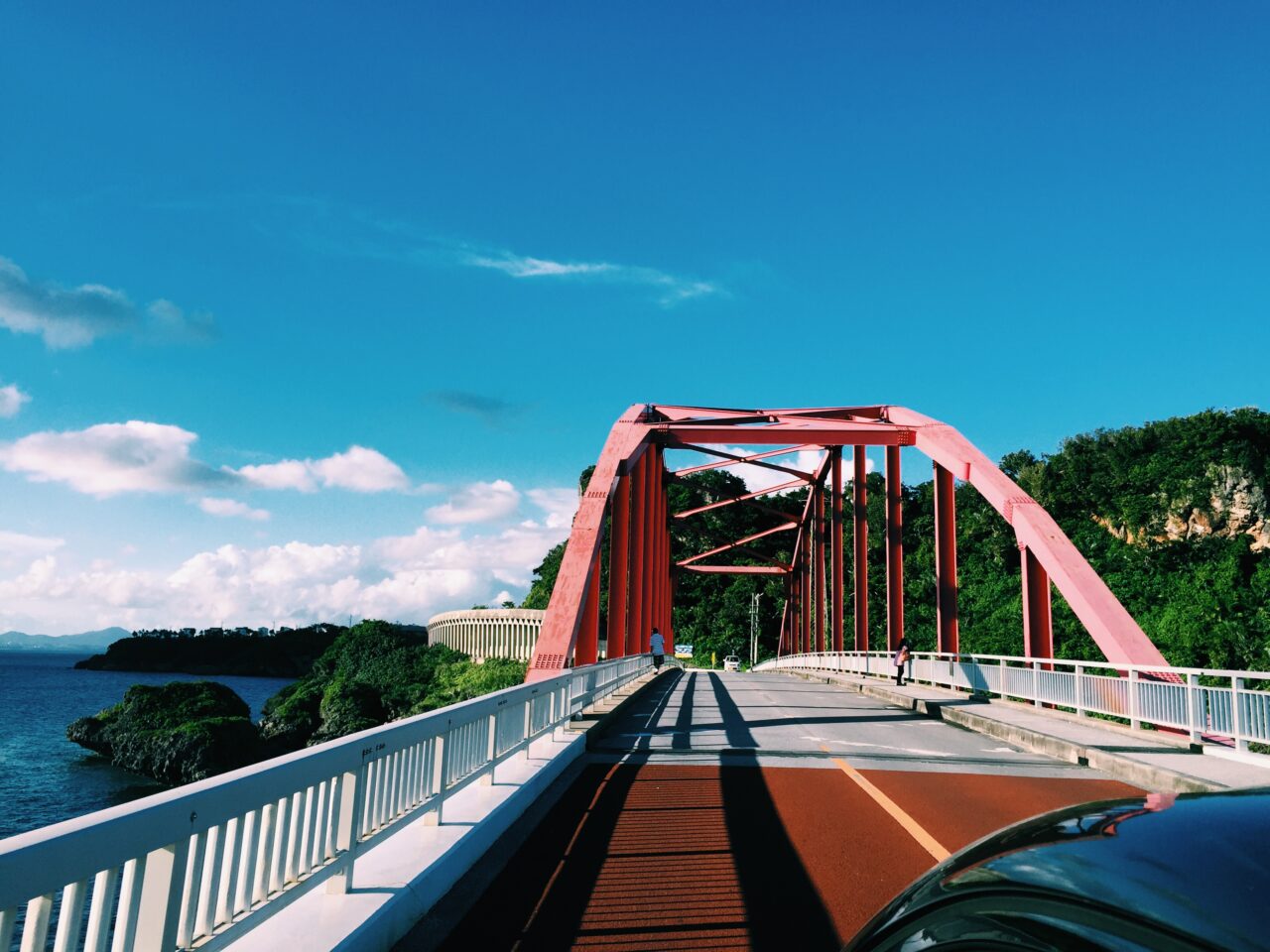
- Ikei Bridge – Iconic red bridge connecting Ikei Island to Miyagi Island.
- Kaichu Road (Ocean Road) – Causeway over shallow blue water; sea on both sides, wide-open views.
- Hedo Misaki Road (Cape Hedo Drive) – Forest drive through Yanbaru; dramatic Pacific views at Okinawa’s northern cape.
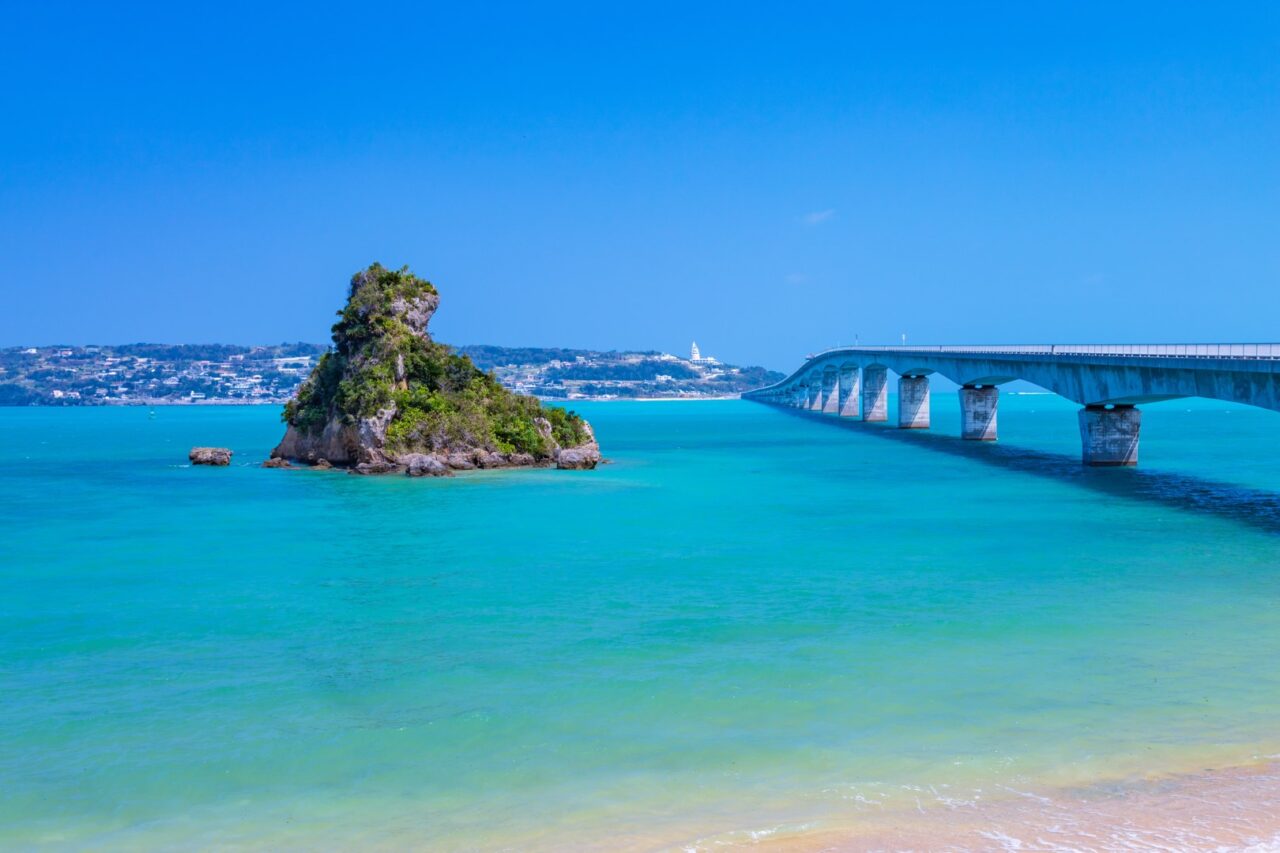
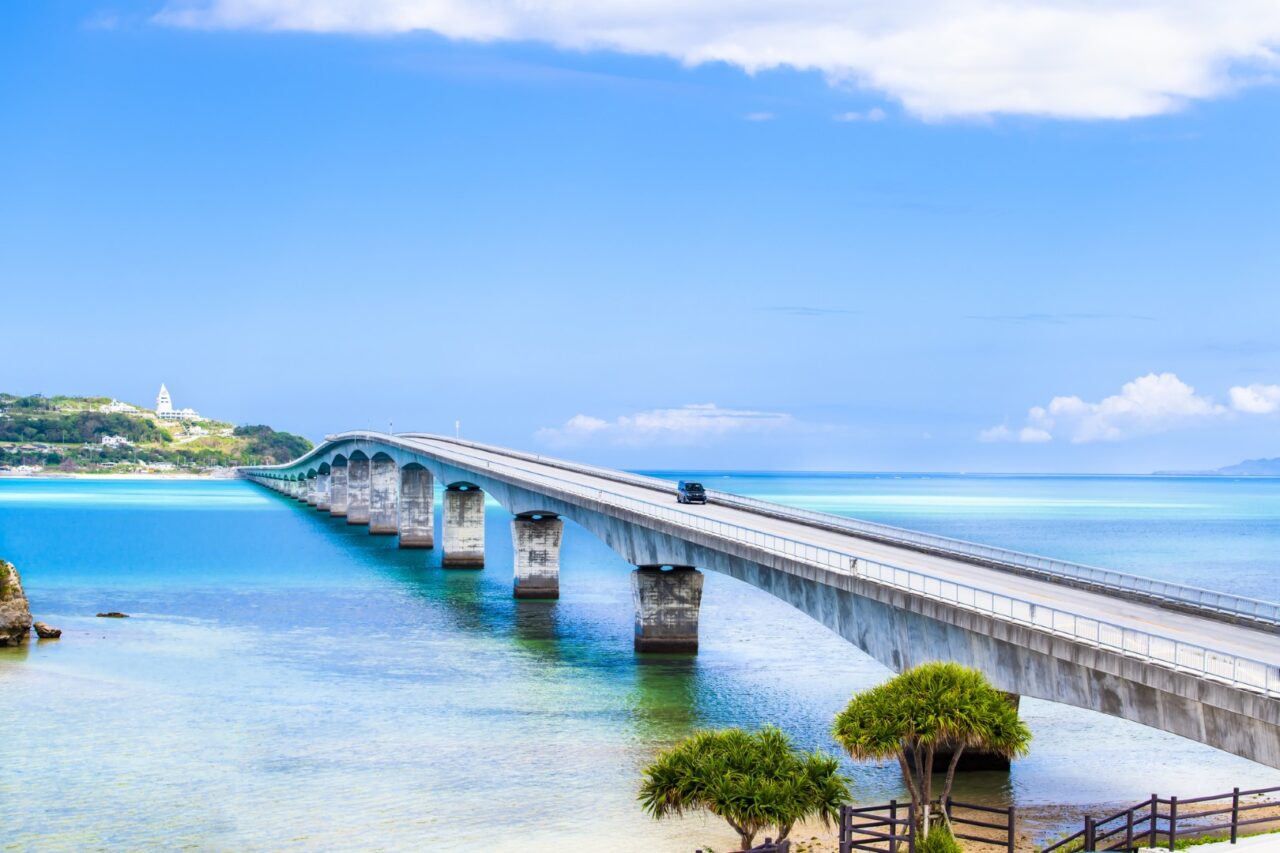
- Kouri Bridge Road – Short bridge drive; clear water, island views, photo stop favorite.
- Irabu Bridge Road (Miyako Islands) – Long ocean bridge; coral-blue water, open sky, iconic island drive.
- Senaga Island Coastal Loop – Easy coastal loop near Naha; ocean views, airport scenery, quick stop.
How to Get to Okinawa
By Air
Okinawa is easily accessed by air, with frequent domestic flights from Tokyo and other major Japanese cities. Naha Airport serves as the main gateway to the islands, with international connections as well.
Once you arrive, renting a car is highly recommended. Public transportation is limited outside Naha, and many of Okinawa’s best beaches, scenic roads, and cultural sites are spread across the island. Driving gives you the freedom to explore at your own pace and make the most of your time in Okinawa.
Recommended Itineraries
Skip the complicated trip planning and instead explore Okinawa with one of Drive Japan’s curated driving routes! These routes are all road-tested and are mapped out so you visit each destination at the right time of day, in the most efficient order, and make sure you don’t miss the hidden gems along the way.
- 3-Day Chugoku & Shikoku Circuit: Osaka → Takamatsu → Kurashiki → Osaka
View all of Drive Japan’s road trip itineraries here: